




Digital Security: Why Are IT Security and Cybersecurity Important?
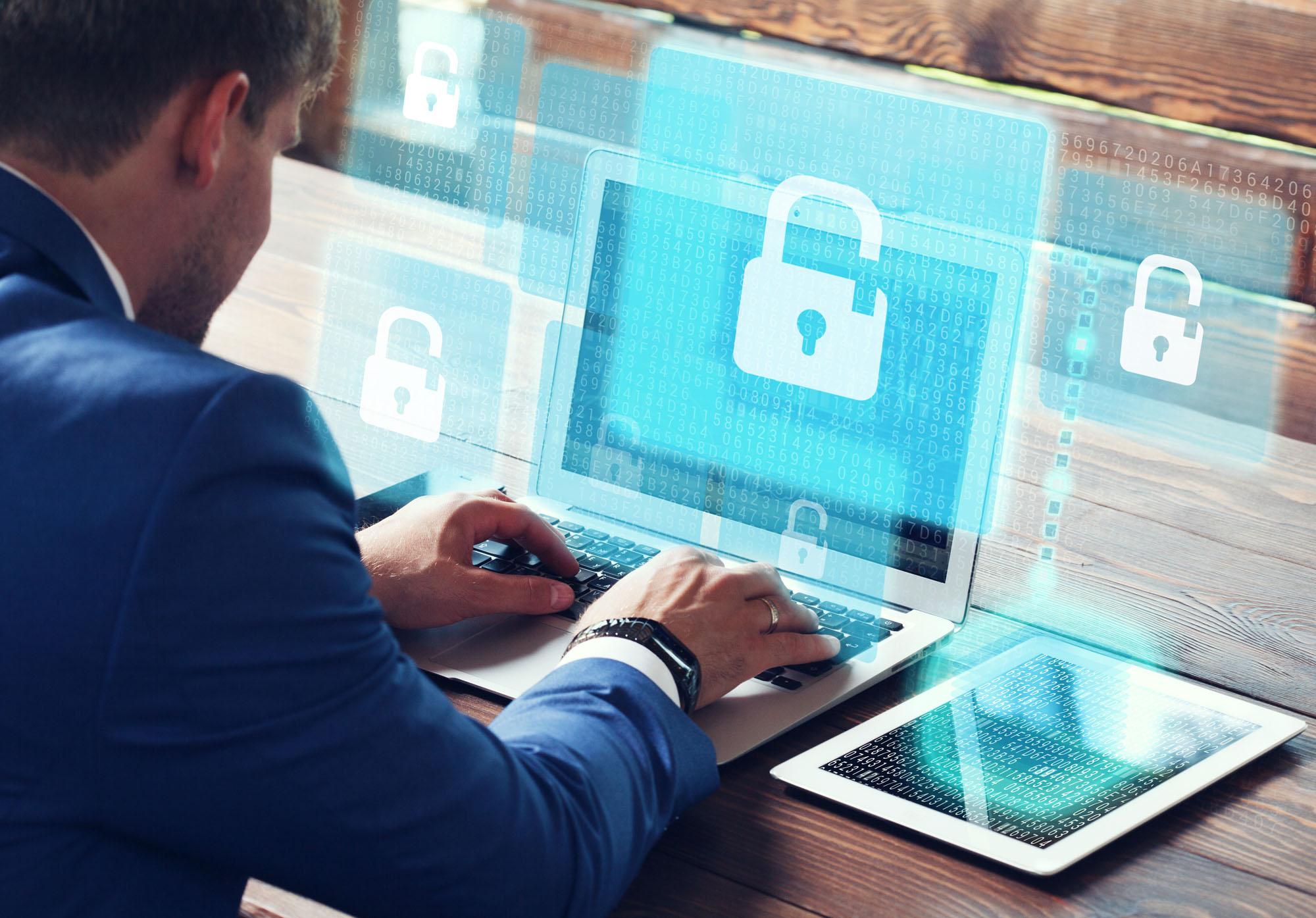
The number of cyberattacks has risen sharply in recent years. This experience is shared by VDE member companies: 71 percent of companies with more than 5,000 employees admit to having already fallen victim to cyberattacks. Only 10 percent believe that Germany is a leader in IT security by international standards. Furthermore, digital attackers are constantly refining their attack strategies—threats lurk in virtually every networked, digital technology. As a result, digital security is becoming an increasingly significant challenge, and cybersecurity is emerging as a key success factor—both in the private and business spheres.
Digital Security and Industry 4.0: CERT@VDE
Industry 4.0 opens up great opportunities and potential for value creation—especially for the German economy, particularly small and medium-sized enterprises (SMEs). At the same time, as production systems become increasingly interconnected with modern ICT systems, the risk of cyberattacks rises. This makes it all the more important to strengthen digital security as a critical success factor for Industry 4.0 and digitalization.
This is where CERT@VDE comes in: the platform for coordinating IT security issues. It offers manufacturers, integrators, plant engineers, and operators in the field of industrial automation the opportunity to exchange information and receive concrete support regarding the security of IT systems and protection against cyberattacks.
Digital Security and Standardization
“Security by Design” is a key prerequisite for ensuring that IT solutions and products can be used interoperably and that the Internet of Things becomes a reality. At the same time, however, a conflict is emerging between IT security and usability: How much IT security is necessary to fend off attacks, and at what point do IT security measures ultimately render IT systems unusable and unacceptable to the user? Standardization aims to resolve this conflict between IT security and usability.
Cybersecurity in the Context of the Internet and the Smart Home
However, the risk of becoming the target of a cyberattack does not affect only businesses: We control our heating on the go via smartphone, and we conduct our banking transactions exclusively online anyway. Increasing digitalization is transforming our everyday lives.
In the future, in addition to PCs and smartphones, more and more devices will be connected to the Internet—and thus also to “third-party” devices and other users who can easily spy on you. This development opens up entirely new avenues of attack for hackers. We’ll show you how you can protect yourself against cyberattacks and stay digitally secure on the go.
What Is Information Security?
Information is interpreted data. A number, for example, can represent a quantity, a time, or a distance between two locations. Only after it is interpreted—such as by adding a unit of measurement—does it become information. Today, we increasingly use data storage devices, computers, and networks to process, store, or transmit information. Information is a key asset for businesses, government agencies, and individuals alike, and must be adequately protected. Information security is based on three pillars: accessibility at all times for authorized users (availability), completeness and accuracy of the information (integrity), and protection against access by unauthorized third parties (confidentiality). In a home setting, for example, information security means preventing unauthorized external access to sensitive data such as private photos, online banking, or smart-home applications.
And what is the difference between information security and IT security?
The term information security rather than IT security is more comprehensive and is therefore increasingly used. However, since the term “IT security” is still predominantly found in the literature, it continues to be used in some IT-Grundschutz publications. Many texts, however, are gradually being realigned to focus on information security.