

(Frankfurt am Main, March 24, 2026) The share of renewable energies in total generation rose to over 55 percent in 2025, and despite the ongoing system transformation, Germany’s electricity supply remains one of the most stable in the world. With the continued expansion of renewable energy and rising electricity demand driven by advancing electrification and artificial intelligence, it is essential to ensure a secure and resilient energy supply. To this end, controllable consumption devices and generation facilities must meet certain technical requirements in accordance with Section 14a of the Energy Industry Act (EnWG) and perform system-supporting functions. How these requirements are specifically defined and can be implemented in practice is of central importance for grid operators, tradespeople, and grid customers alike. Therefore, VDE FNN has further developed the specifications in the Technical Connection Rules (TCR) for Low Voltage (VDE-AR-N 4100) and Power Generating Plants in the Low Voltage Network (VDE-AR-N 4105) and published an update.
From the meter box to digital control for heat pumps, wallboxes, and more
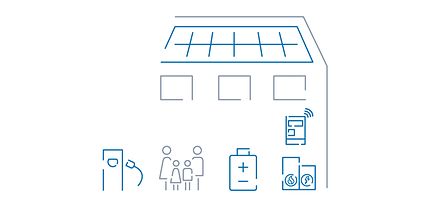
The focus is on further developing the guidelines for setting up new meter locations. These guidelines are a prerequisite for connecting and digitally controlling generation facilities and consumption devices, such as storage systems, heat pumps, and wallboxes — using smart metering systems. The goal is to establish a uniform industry-wide approach to connecting the communication devices of customer installations in order to avoid regionally specific solutions. For new installations in accordance with Section 14a of the Energy Industry Act (EnWG), the TCR Low Voltage specifies a mandatory digital interface for control commands based on VDE-AR-E 2829-6-1, with EEBUS recommended as the cross-manufacturer minimum communication standard. For certain installations, relay contact control — the so-called control signal terminal block — is still permitted during a transition phase. “Implementing these requirements is the basis for grid operators to provide reliable congestion management and for grid customers to be assured that their power supply is never at risk,” explains Kabs.
Practical issues: Multiple Grid Connections on a Property and Zero-Net Metering
In addition to the major issues surrounding the maintenance of system stability, the revised TCRs also provide clarity on questions that arise in the day-to-day practice of grid operation. For example, the Low-Voltage TCR describes how multiple grid connections on a single property can be implemented from both an organizational and technical standpoint. The TCR for Generation Facilities on the Low-Voltage Grid answers, among other things, the question of how PAV, E-monitoring can be utilized up to so-called zero feed-in. The advantage: Generation facilities and storage systems can be connected to the grid even when grid capacity is insufficient. This is because PAV ,E-monitoring ensures that only the contractually agreed-upon power is fed into the grid. This is the case, for example, when a grid is already operating at full capacity and facilities are to be connected before grid expansion is completed.
Looking ahead: Further adjustments starting in early 2027
All of these challenges are addressed in the updates that have now been published. At the same time, VDE FNN is already working intensively on an expansion of the Low-Voltage Technical Rules (VDE-AR-N 4100/A1), which is scheduled for publication in early 2027 and will further pave the way for the digital control rollout through simplifications. This will also include detailed elaboration of aspects such as the installation of smart metering systems when making changes to existing facilities. “We are preparing many things that are not yet sufficiently defined from a legal standpoint from a technical perspective, so that grid operators are as well-equipped as possible for the future,” says Dr. Joachim Kabs. In doing so, VDE FNN is creating opportunities for action even though the European Commission has not yet presented a revised version of the urgently needed European framework, in particular the Network Code Requirements for Generators (RfG).