

What are cells, batteries, and accumulators?
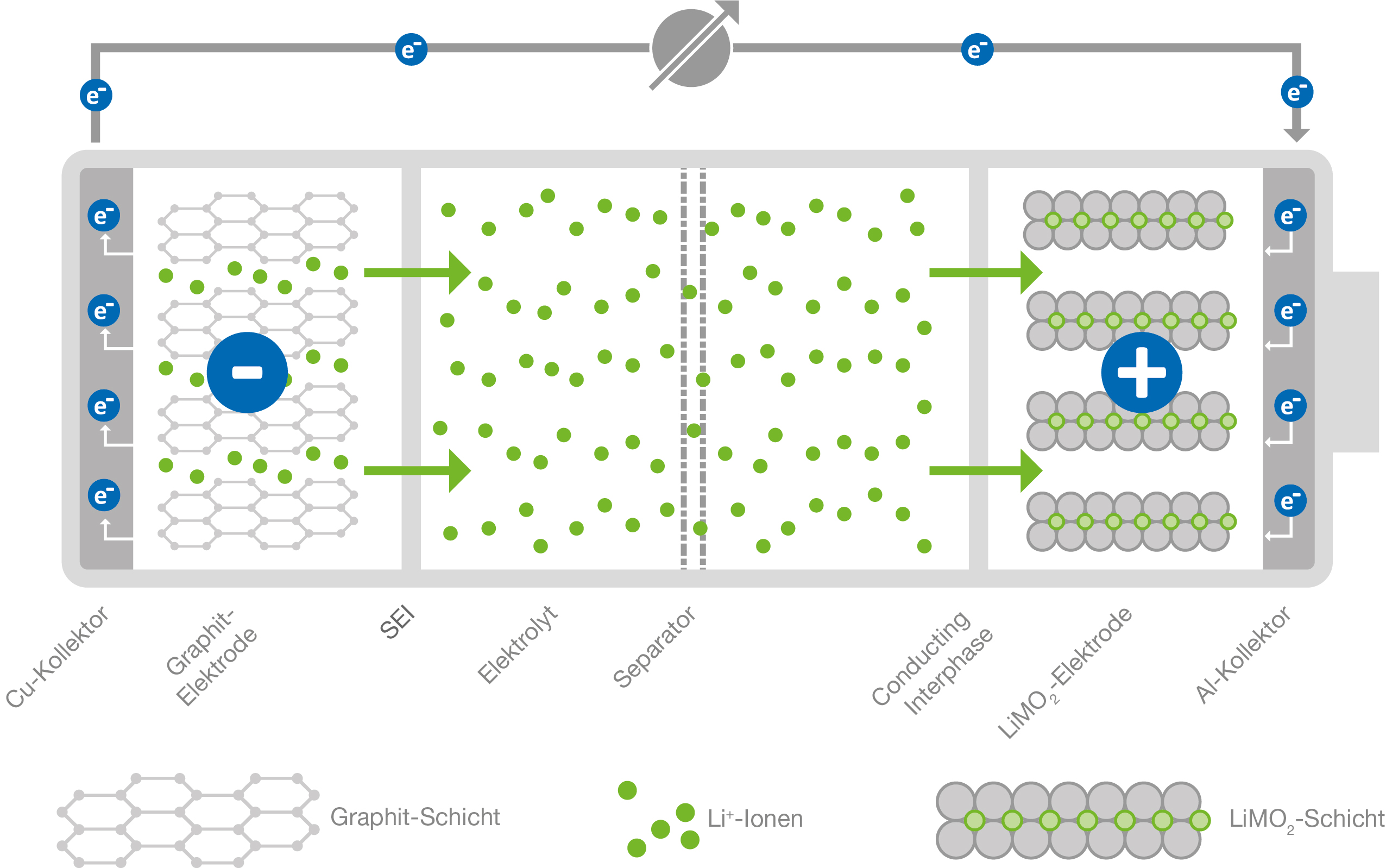
A cell is the smallest electrochemical unit, consisting of an anode, cathode, separator, electrolyte, conductor, and cell can. A charged cell stores energy in the form of voltage and current.
A battery always consists of one or more cells that are connected to each other. Batteries are divided into primary and secondary batteries. Primary batteries cannot be recharged. Secondary batteries, on the other hand, can be charged and discharged multiple times. The latter are also called accumulators.
What are vehicle batteries made of, for example?
A traction battery usually has a modular design, in which several battery modules are interconnected to form a complete package. The individual cells within the modules are electrically connected in series or parallel to achieve the desired voltage, current, and capacity.
A battery management system (BMS) is used for monitoring and control, checking voltage, current, temperature, and, for example, the state of charge. The BMS ensures that the module is always operated within its defined safe operating range. In most cases, several slave units at the module level communicate with a central master control unit, which takes over the overall coordination.
A cooling plate is often integrated for temperature control, which dissipates the heat generated and thus ensures a uniform operating temperature of the battery.